All posts by VK2VEL

Century for Centenary Project

The Waverley Amateur Radio Society is on the countdown to its centenary on 27 January 2019!

The ‘Century for Centenary Project’ is the first of the activities to celebrate the centenary of the club’s founding in 1919.

The ‘Century for Centenary Project’ is very simply, a project intended to encourage member’s activity on the radio, with the aim of achieving the DXCC (DX Century Club) award, and as many other operating awards as possible for club callsign VK2BV,  in the next three years to the centenary in 2019.

Operating awards are issued for achievements in working contacts and receiving verifications by QSL.  Examples of some awards include the ‘DX Century Club’ for working and QSLing 100 DX ‘countries’ (entities) on HF, or ‘Worked All States’ on VHF.   There are a range of operating awards on offer through a number of programmes administered by the WIA, ARRL, eQSL and QRZ.com among others.

Financial members of the club can read further on how to participate in the Century for Centenary Project.

Guest speaker, 18 May monthly meeting. Mark Fahey – Behind the Curtain – Gathering propaganda broadcasts inside North Korea

The special guest speaker for the Wednesday monthly meeting on 18 May is Mark Fahey.  Mark Fahey is a well known expert on North Korean broadcast media, who will be speaking  about his six visits to North Korea, where he not only documented and photographed propaganda as a part of every day life, but using clandestine recording devices, monitored and recorded North Korean radio and tv broadcast media signals.

Mark has documented this project as an interactive media e-book, Behind the Curtain.
http://www.behindthecurtain.asia/

More about the project:
http://mashable.com/…/life-inside-strangest-nation-on-ear…/…

Mark is well known in SWL circles for breaking the puzzle of the Chinese Firedrake SW broadcast jammer. http://www.satdirectory.com/firedrake.html

This is a not to be missed presentation about clandestine toilet breaks, the missing 5th floor of a Pyongyang hotel, MacGyvered radio intercept devices and sending SMS messages from the northern side of the Demilitarised Zone at Panmunjom.

Club Entry to the Harry Angel 80m Sprint Contest

The Waverley Amateur Radio Society is entering the Harry Angel 80m Sprint Contest on Saturday 07 May 1000-1146 UTC (2000-2146 local) operating from the club station.

This is a short contest ideal for the beginner to amateur radio and contesting or the casual operator.  There is a small club team preparing for the contest, but all members are encouraged to join the club operation.

We particularly encourage those members who are new or returning to amateur radio, those members who don’t normally participate in contests due to commitments, or those who cannot normally operate HF at home.   Experienced contesters will be on hand to advise on operating procedures and contest strategy, but the emphasis will be on practise and experience for the new contesters.  We are also looking for more CW operators.

This is a perfect opportunity to hone the club’s contest skills and experience, as there are a number of contest opportunities over the next few months.
Further details about the contest:  http://www.wia.org.au/members/contests/harryangel/

If you are interested, please contact VK2VEL.  Further information will be circulated in due course.

WIA President’s Visit in March

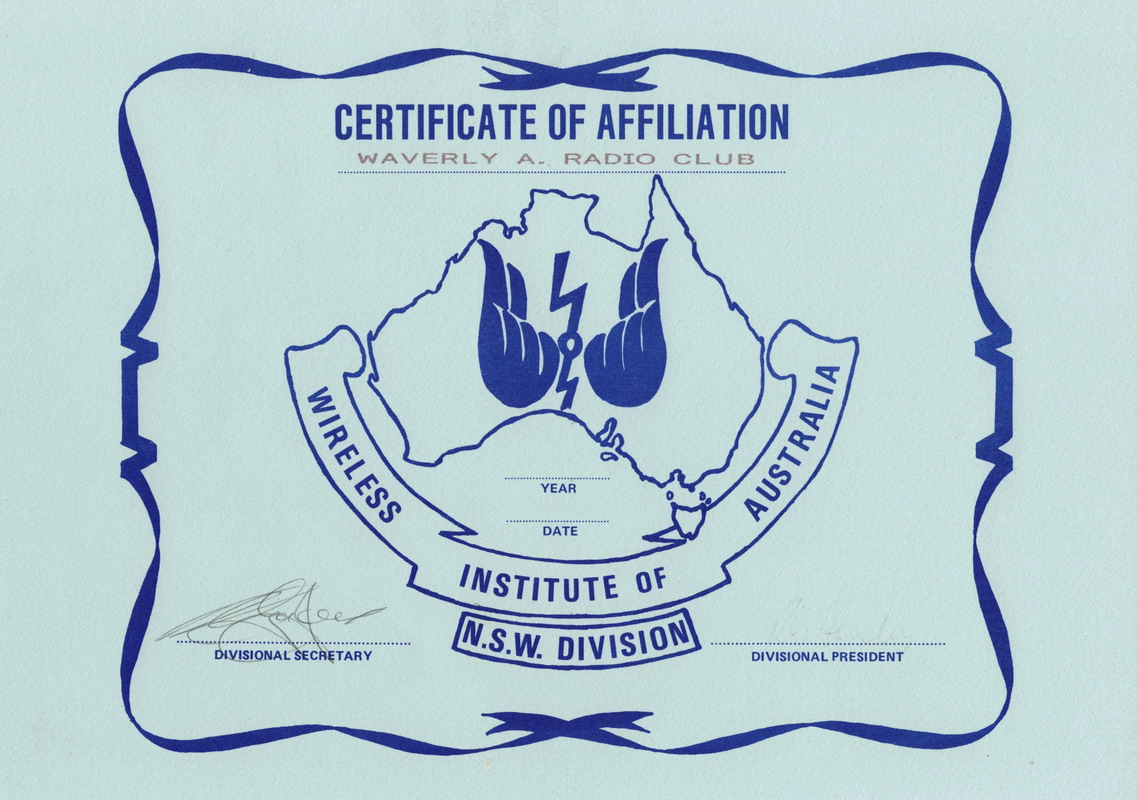
This year, the Waverley Amateur Radio Society celebrates its 90th anniversary as a WIA affiliated club.  Fittingly, the club welcomed WIA President Phil Wait VK2ASD as guest speaker at the club’s monthly meeting on 16 March 2016.

After joining members for dinner in the Rose Bay RSL Club, Phil spoke about three broad areas in a wide ranging presentation.  Phil began with a review of the role of the WIA and its range of members services, such as Amateur Radio magazine, the QSL bureau, as well as its roles in advocacy with government, international liaison and coordination, and its role in amateur radio education, licensing and callsign administration.  Phil provided a snapshot of the WIA today, reviewing the state of membership and financial health, as well as addressing some of the criticisms leveled at the WIA, including a review of recent operational challenges and responses (more on these issues can be found in the April 2016 issue of Amateur Radio).

Finally Phil discussed the WIA’s strategic directions for the future, with a range of objectives such as improving member’s services, improving amateur license conditions with the forthcoming changes to the regulatory framework (eg. increased power for all levels of licenses, access to digital modes and computer control for foundation licenses, full access to 6m for standard licenses).  A major WIA strategic objective is to promote the growth of amateur radio by promoting its relevance in the 21st century at a fundamental level, by promoting the public value of amateur radio.  Phil spoke about addressing these objectives on two levels – through youth involvement, particularly via the STEAM (Science, Technology, Engineering, Arts, Maths) initiative in school curriculum development, and through technology involvement via DIY and maker activities.

Phil took a wide range of questions from the floor and engaged in some thoughtful discussion to feedback, to end a useful and mutually informative presentation and dialogue. – Waverley ARS

WIA affliation c_resize1985


Happy 97th Birthday to the Waverley Amateur Radio Society!

Today the Waverley Amateur Radio Society celebrates its 97th birthday!
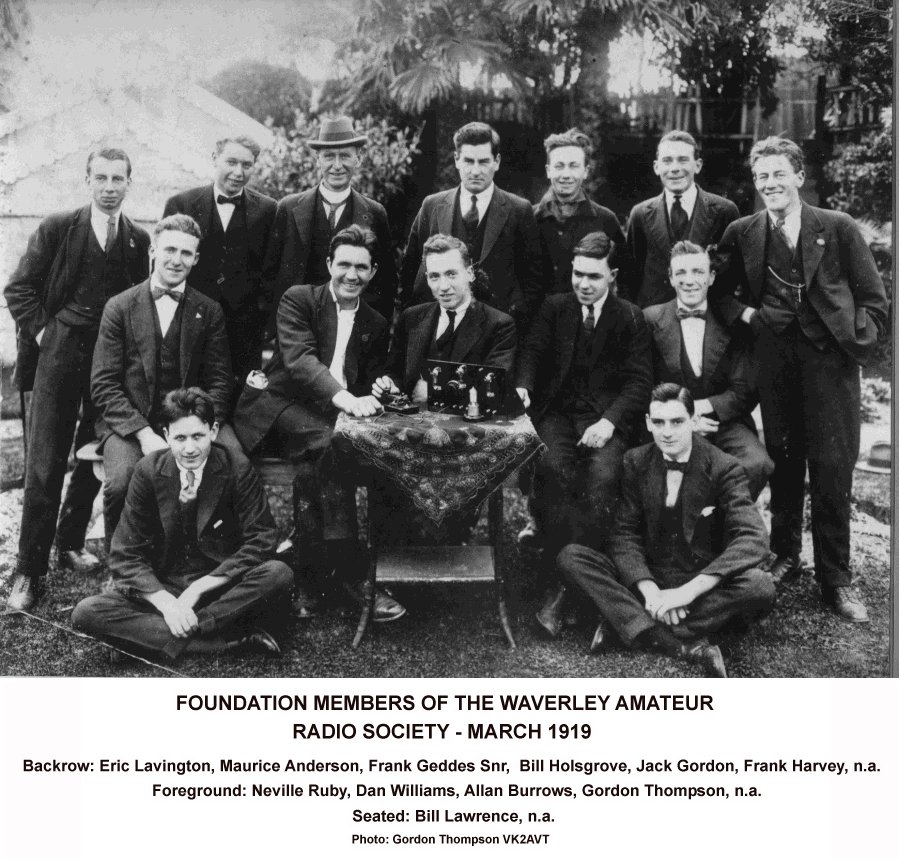
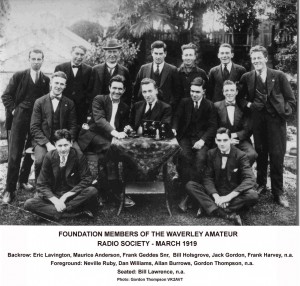
On the evening of 27th January 1919, a little over two months after the end of the Great War, the Waverley Amateur Radio Club was formed at a meeting held at ‘Altmont’ 13 Macpherson St, Waverley, the home of Frank Geddes Snr in the eastern suburbs of Sydney.
Amongst those in attendance were some of the first Australian amateur experimenters, first licensed in 1911; Frank Leverrier KC (XEN, 2BK, Vice Chancellor of the University of Sydney & first President of the Wireless Institute of NSW), Malcolm Perry (XCP) and Ray Allsop (XCA & founder of the Raycophone radio company). The founding members of the club also included Frank Geddes Snr, Frank Geddes Jnr, Les Holdgrove, Eddie Bowman, F. Swinbourne, R.D. Charlesworth, Alan Burrowes, C. Doyle, Gordon Thompson (2GT, VK2AVT & Hon Life Member until becoming a silent key at the age of 96 in 2001).
The Waverley Amateur Radio Club was formally incorporated in 1920, and issued its first club license, N249 in the same year. The club was based at ‘Almont’ 13 Macpherson St, Waverley until the 1950s. The club was once affiliated with the ARRL and has been affiliated with the WIA since 1926. Apart from the period of World War II, the Waverley Amateur Radio Society has been continuously licensed since 1920, with the following callsigns: N249 (1920-1922), 2BV (1922-1925), A2BV (1925-1927), OA2BV (1927-1929) and VK2BV (1929-1939 & 1946-present).

P 1920

https://vk2bv.org/home/waverley-amateur-radio-society-home-page/club-history/qsl-cards/

VK100ANZAC Activation 29OCT-04NOV

The Waverley Amateur Radio Society will activate VK100ANZAC on Thursday 29OCT15 0000 UTC to Wednesday 04NOV15 2359 UTC.

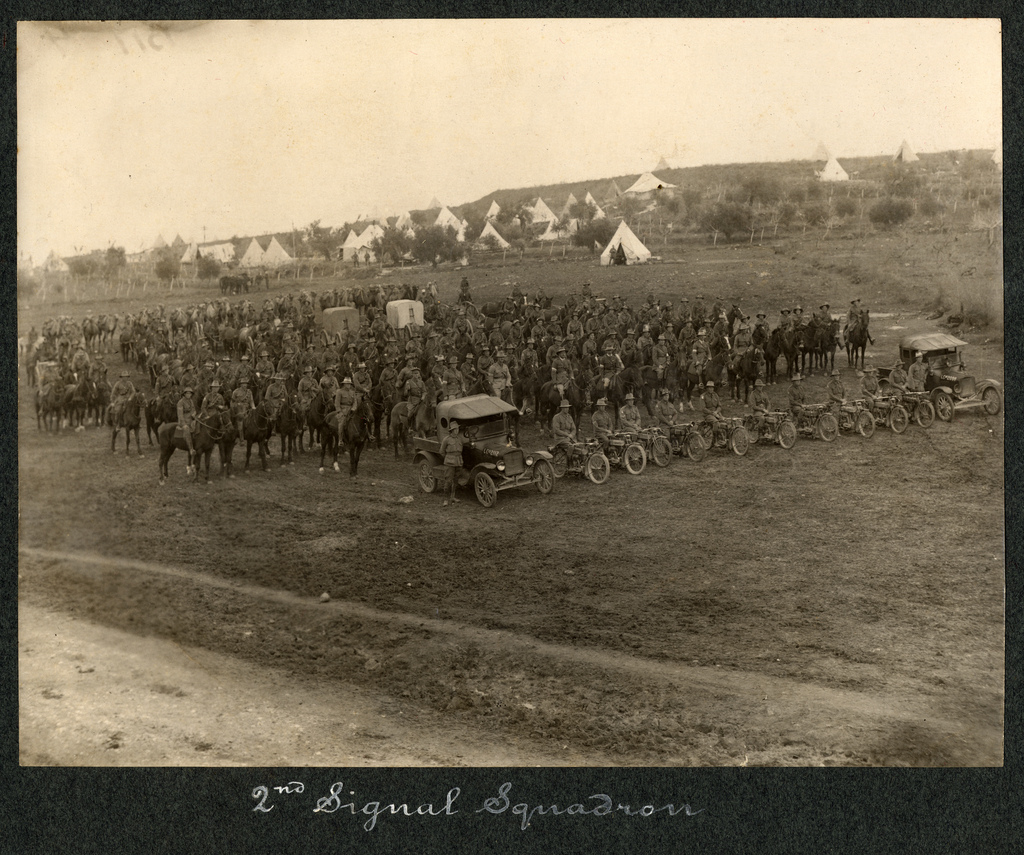
In this activation, the Waverley Amateur Radio Society remembers one of its earliest club members, 16062 LCPL Daniel Williams, who served with the 1st Signals Squadron, ANZAC Mounted Division and the 2nd Signals Squadron, Australian Mounted Division from 1916 to 1919 in Egypt, Palestine, Jordan and Syria.

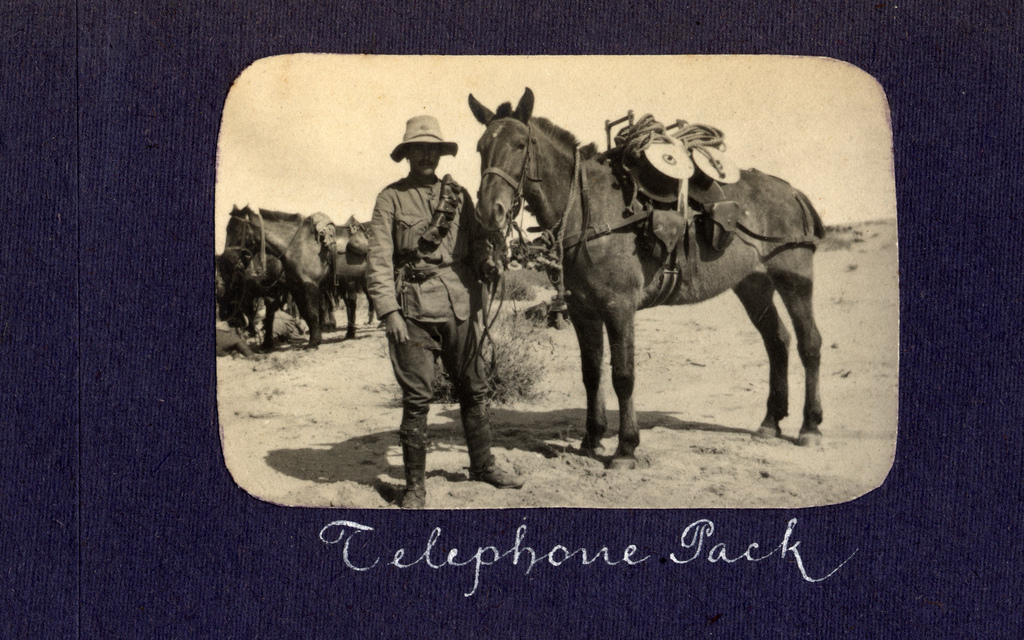
Daniel Williams was born in Birkenhead, England and lived in the Sydney suburb of Little Coogee, now Clovelly. Williams enlisted as a signaller in March 1916 and arrived in Egypt in December 1916, to train as a telephone operator and linesman with the Signal Squadron, Imperial Mounted Division, which later became 2nd Signals Squadron, Australian Mounted Division.

In December 1917, Williams was posted to 1st Signals Squadron, ANZAC Mounted Division, where he first saw action at the Battle of Jerusalem. Williams served through the remainder of the Palestine campaign including the battle of Jericho and into the campaign in Jordan, including the battles of Amman and Es Salt and in the Jordan Valley, where he was wounded by shell concussion in June After a period of recovery, Williams returned to the front and was posted to 2nd Signals Squadron, Australian Mounted Division in Syria on 26 October 1918, one day before the signing of the Armistice by the Ottomans, ending the war in the Middle East.

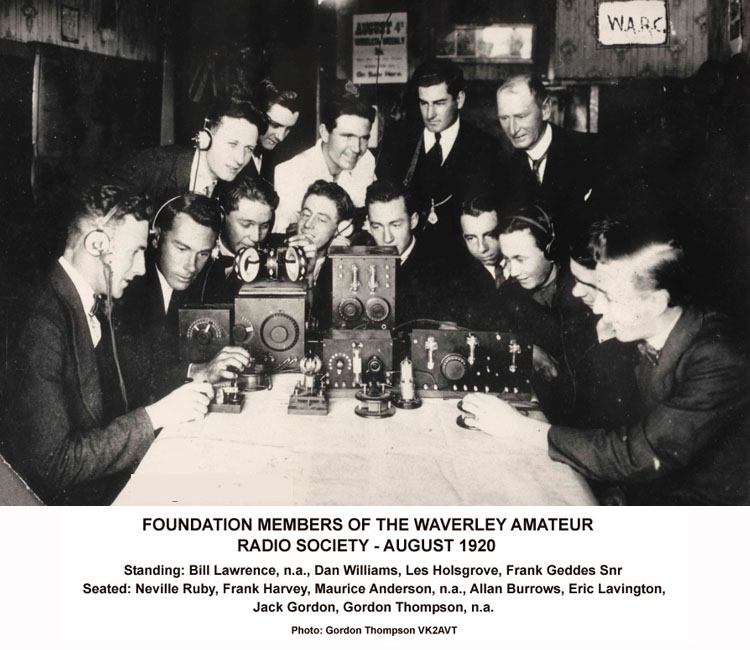
Daniel Williams returned to Australia in September 1919. Williams joined the then Waverley Amateur Radio Club, formed in January 1919, and was already a member when the club was issued its first experimental license, N249, in August 1920. The Waverley Amateur Radio Society remains the local amateur radio club for the City of Sydney, the inner west and the eastern suburbs. It is Australia’s oldest continually licensed amateur radio club, and celebrated the 95th anniversary of its first license in August 2015.

The Waverley Amateur Radio Society proudly remembers LCPL Daniel Williams, one of its founding members, and remembers all signallers who served in World War I.   The Waverley Amateur Radio Society’s VK100ANZAC activation from 29 October to 04 November falls between anniversary of the Armistice of 27 October 1918 which ended the war in the Middle East, and the Armistice of 11 November 1918 which ended the war on the Western Front.   The coming of peace paved the way for the foundation of the Waverley Amateur Radio Club, in January 1919.
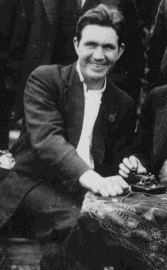
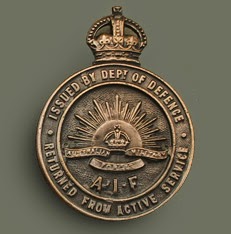
p_1919.jpgp_1919Returned from Active Service badge


Daniel Williams wearing his Returned From Active Service badge, with early members of the Waverley Amateur Radio Club in 1920.
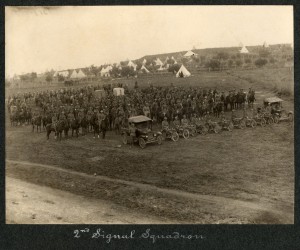
7219835614_4beffc55a2_b

2nd Signal Squadron, Australian Mounted Division, in Palestine.
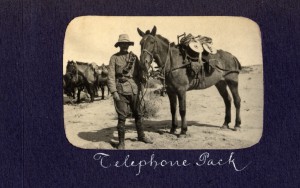
 

7702007282_be8547091b_b

A telephone operator/linesman, 2nd Signal Squadron, Australian Mounted Division, Palestine.


Inward QSL cards received

20150628_140932_resize


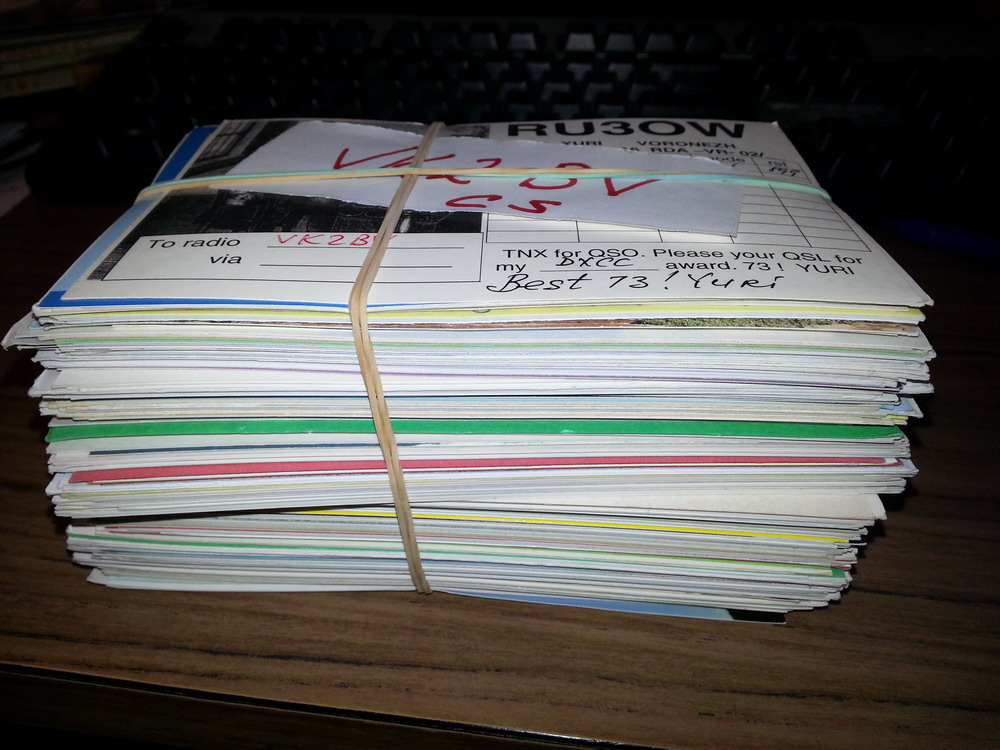
Today, the Waverley Amateur Radio Society received its first batch of QSL cards since 2009!  This is the 1 kg stack of cards, 8 cm high of incoming QSL cards for VK2BV and VI2BV90, some of which date back to 1999!

The tragic loss of our former QSL manager Lynn VK2FLTJ (SK) meant that this aspect of club activities has been largely neglected for a number of years, but this has now changed, and we will ensure the club stays on top of our QSLs in the future.  We will even ensure that the 1999 inward QSLs are replied to before the 20 year mark!

The club’s log keeper Tony VK2KZ and QSL manager Ed VK2VEL have been working towards getting both the club’s logs and QSLs sorted into proper order.  Sadly, most of the logs and QSL cards from 1922 to 1988, such vital aspects of a radio club’s history, are probably lost forever.

Apart from a few treasured logs from the 1920s to 1970s, most of the club’s logs date from 1988 with sporadic loggings until a sharp increase in logging activity from 2008.  This reflects the rise in club membership and general activity with the arrival of new operators into the hobby via the Foundation license, and the club hasn’t looked back since.

A quick scan of the logs shows that 2009, the club’s 90th anniversary year, was probably the peak year of activity.  This was the year of the special event callsign VI2BV90, entry into multiple contests, and the year of ‘three lighthouses in one weekend’ during the International Lighthouse and Lightships Weekend, when the club activated Hornby Light (AU0041), Endeavour Light (AU0052) and our traditional activation of Macquarie Light (AU0022).

To ensure that the clubs logs and QSLs are never lost again as the club moves towards its 100th anniversary in 2019, in addition to recording the traditional paper QSLs, the  club’s logs are now uploaded into the ARRL Logbook of the World, eQSL, Clublog and QRZ.com.  The club now has multiple, searchable online logging systems for the service of the hobby, and is also now participating in a number of operating award programmes.  A report on the club’s progress in these award programmes and some more statistics will be made when we have caught up with the sorting out the logs and QSLs.

Members who activate the VK2BV callsign are reminded that they should send their logs are sent to Tony VK2KZ for recording and processing.

Members who want to know more about QSLing, either paper or electronic, award programmes and using the QSL bureau can contact Ed VK2VEL.


Trans Tasman Low Bands Challenge 18 July 2015

The Trans-Tasman Low Band Challenge is on Saturday 18 July  0800 – 1400 UTC  (1800-0000 local).  Bands are 160m, 80m and 40m, and modes are SSB CW and Digital (RTTY and PSK ).  Multi-operator/Multi-transmitter entries are permitted.  This intense but short duration contest, is an ideal contest for a club entry and an excellent introduction to contesting.

The first 80m Trans-Tasman Contest was organised by the Waverley Amateur Radio Society in 1922.

http://www.wia.org.au/members/contests/transtasman/